
The complete guide
HB3 9005 LED Headlight Bulbs, A Practical Buyer's Guide
The problem this set is meant to solve
You pop the dust cap off the back of a headlight, pull out a bulb, and the light that comes out of it is yellow and tired looking. That is a halogen bulb doing what halogen bulbs do. For a daily driver on public roads, the right fix is a fresh halogen bulb of the correct type. For a project car, a trail rig, a paddock vehicle or a show build that does not see public roads, plenty of people want something that looks different, and that is where an LED conversion bulb comes in.
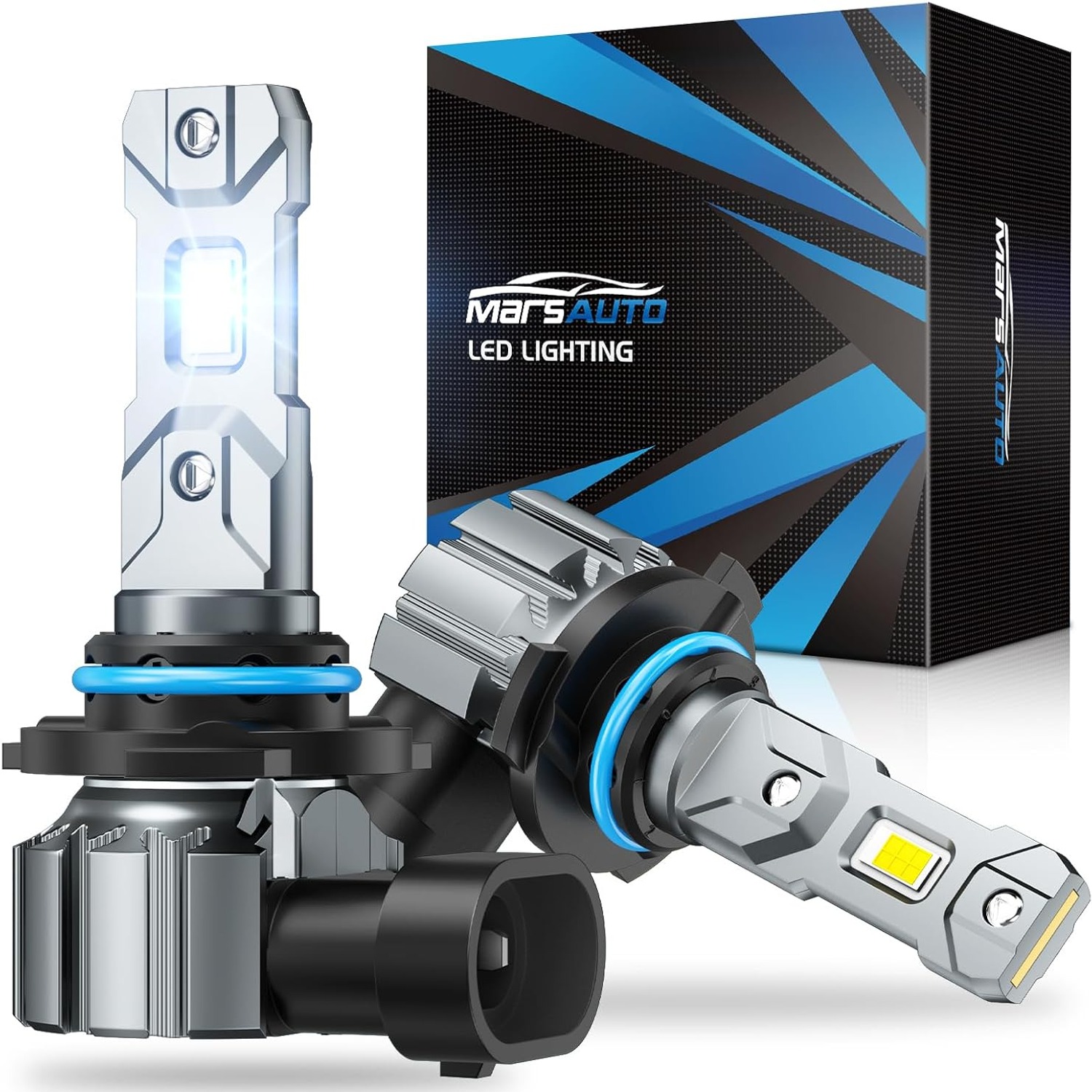
This page is about one specific set: two LED bulbs with the HB3 fitting, which is the same thing as 9005, running at a 6000K color, built without a fan, and rated IP68 against dust and water. You will not find output claims, lifespan hours or wattage figures here, because none were given, and guessing at them would not help you.
Before going any further, the important bit. In the United States, fitting LED bulbs into headlights that were built for halogen bulbs is generally not permitted on public roads. This set is sold for off-road, show and private property use. If the vehicle in question drives on public roads, this is not the part for it.
HB3, 9005, and why the naming is confusing
Bulb fittings pick up more than one name over time. HB3 is the designation you will see in some catalogs. 9005 is the designation you will see in others. They describe the same base shape and the same connector. If your current bulb is stamped with either one, this set matches it.
What the shared name does not tell you is which beam position the bulb sits in. That varies by vehicle. Some use HB3 in one position and a different fitting in another. The reliable method is simple: pull the existing bulb out and read what is printed on the base, or check the bulb chart in your owner's manual. Do that before you order, every time. It takes two minutes and saves a return.
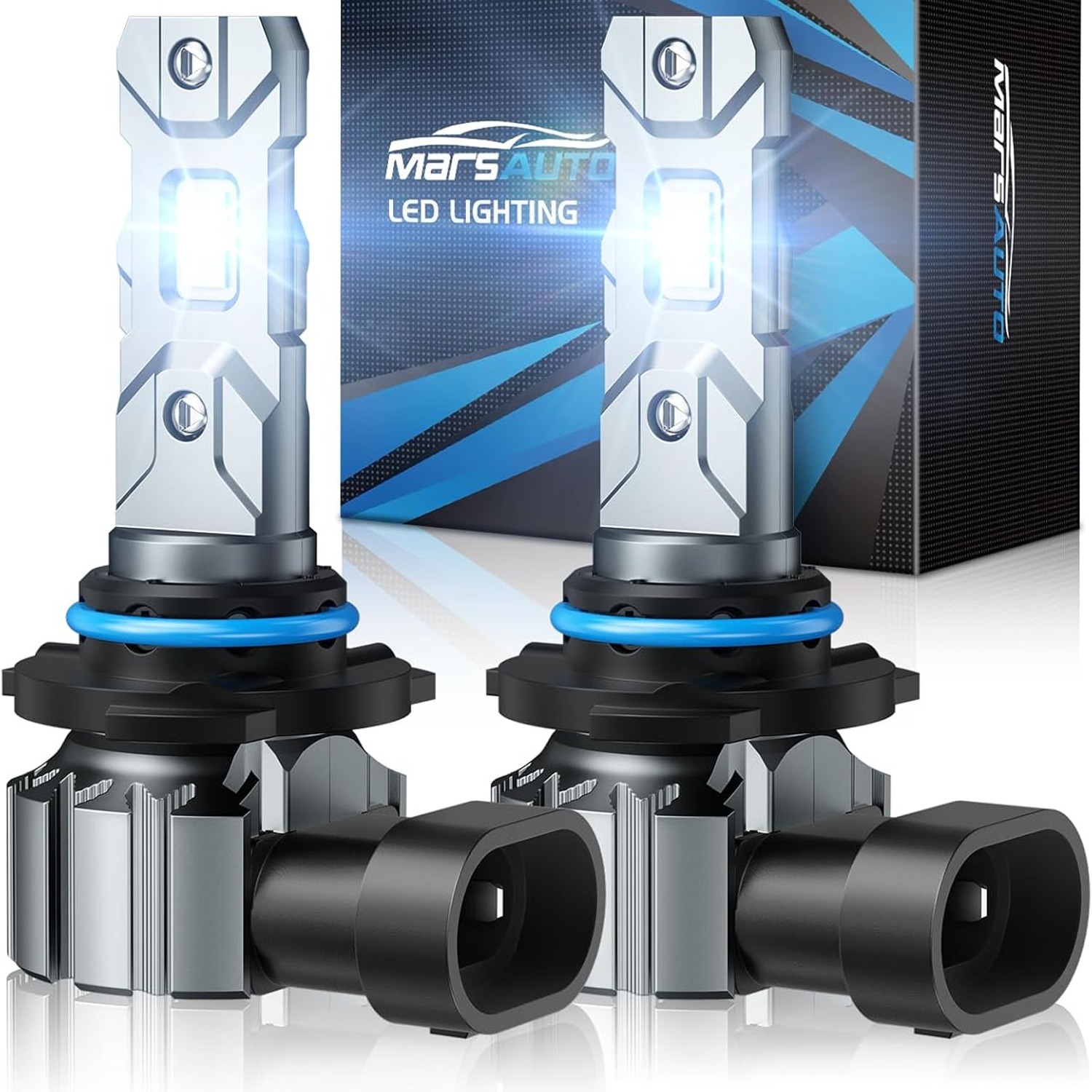
A pack of two matters more than it sounds like it does. Headlights are seen as a pair, and the human eye is very good at spotting a color mismatch between left and right. Changing both sides at once keeps them consistent.
What 6000K actually tells you
Kelvin is a color scale, not a brightness scale. Low numbers lean warm and yellow. High numbers lean cool and blue. At 6000K you land in the cool white range, which most people describe as a clean white with a faint blue edge, especially next to an older halogen bulb.
That tone is the main reason people go looking for the best 6000K LED bulbs for a build. It changes how the front of a vehicle reads, particularly at a show or in photos. What it does not do is tell you anything about how much light comes out. Two bulbs can share a color temperature and produce very different amounts of light. Since no output figures are published for this set, treat the 6000K number as a description of color and nothing more.
One more thing worth knowing. The headlight lens itself shifts the apparent color. A lens that has gone slightly cloudy or yellow will pull a cool white toward warm. If you are chasing a particular look, clean the lens before you judge the bulb.
Fanless, and what that means in practice
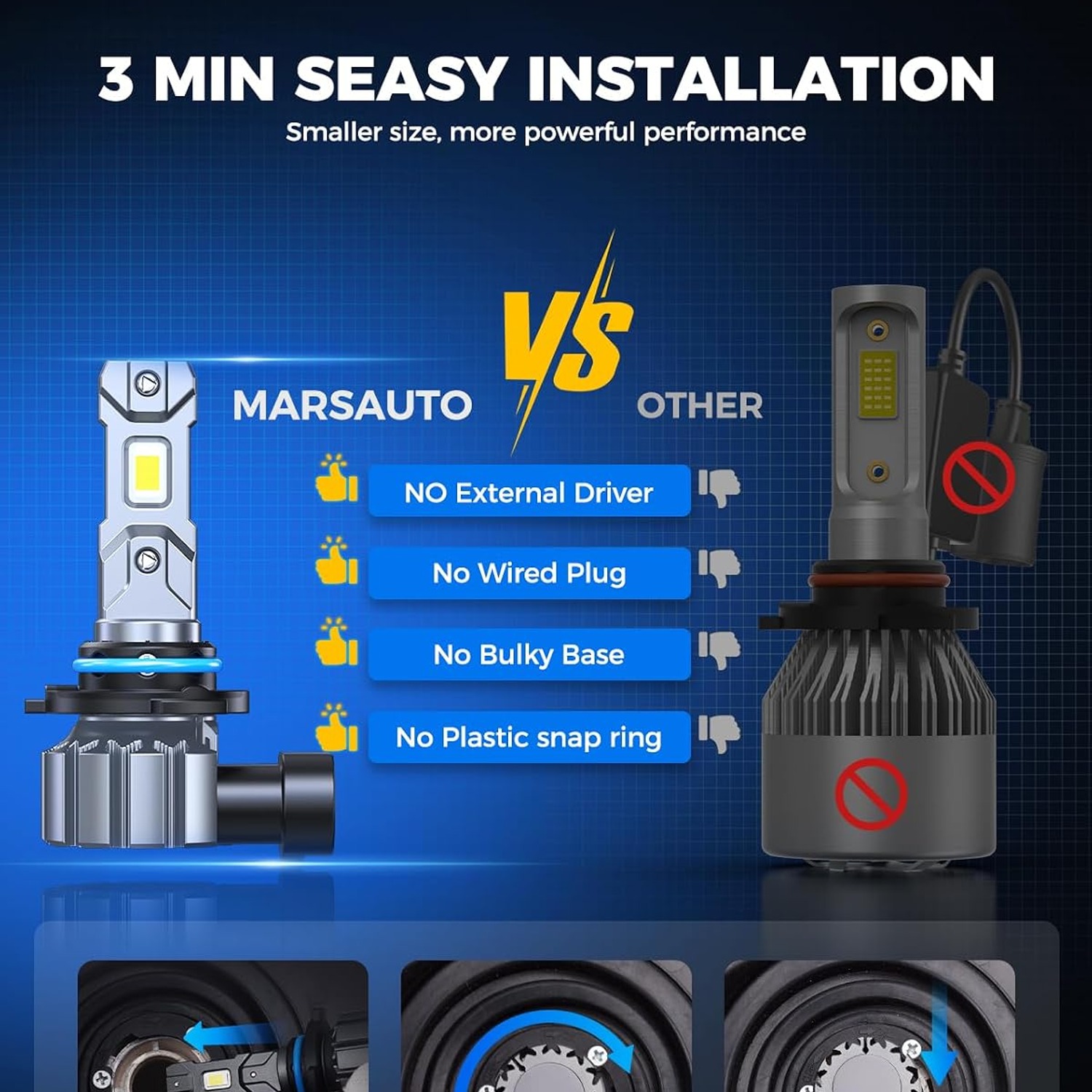
Every LED bulb has to deal with heat at the base. Two approaches dominate. One is a small fan that pushes air across an internal heatsink. The other is a passive design that relies on fins, braid or a solid heatsink body with no moving parts. This set uses the passive approach, with no fan.
The upside is easy to describe. No fan means no fan noise, and no fan to collect dust or eventually stop turning. In a quiet vehicle, or in a headlight that sits close to the cabin, that silence is noticeable. It is a common reason people search for the best fanless LED headlight bulbs rather than any LED bulb at all.
The trade-off is space. Passive cooling usually means the heatsink area needs some clearance and some airflow behind the housing. Before you order, measure from the back of your bulb socket to the nearest obstruction, whether that is a wheel well liner, a battery, a strut tower or just a tight dust cap. If the space is very tight, that is worth knowing in advance.
The IP68 rating, read properly
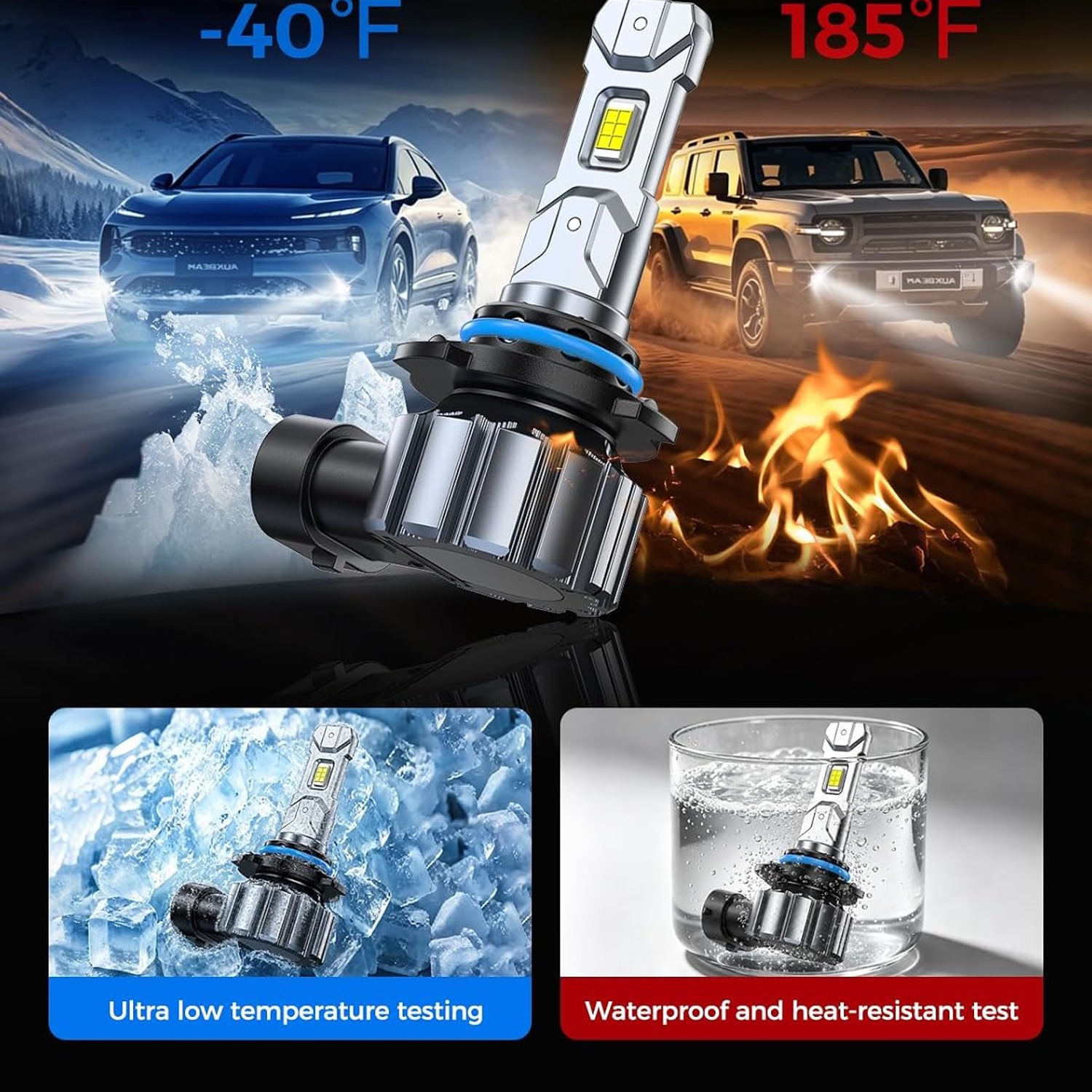
IP ratings use two digits. The first covers solid objects and dust. The second covers water. IP68 sits at the top end of the common scale on both counts, which is why it is one of the specs people look for when shopping for the best IP68 LED headlight bulbs.
Here is the sensible way to think about it. The rating describes the bulb itself, not the headlight. Your headlight housing, its seal and its dust cap are still doing the main weather work. An IP68 bulb inside a housing with a cracked lens or a missing cap is still sitting in a wet environment. So treat the rating as good insurance rather than permission to skip the sealing step during installation.
Vehicle electronics, warnings and flicker
This is the part that catches people out. Many vehicles monitor their lighting circuits by watching how much current each bulb draws. A halogen filament draws a predictable amount. An LED bulb draws differently. The vehicle can read that difference as a failed bulb and put a warning on the dash, or the circuit can produce a flicker.
Not every vehicle does this. Plenty are completely happy. But some will need a CANbus decoder fitted inline to settle the circuit down, and a decoder is not included with this set. If you know your vehicle is fussy about bulb monitoring, plan for that extra part before you start.
Installing them without drama
Turn the vehicle off and let the headlight cool if it has been running. Get access to the back of the housing, which on some vehicles means removing a liner, a cover or the headlight itself. Take off the dust cap. Release the retaining clip or twist lock holding the old bulb, and unplug the connector.
Handle the new bulb by its base. Keep your fingers off the LED chips and the lens area, since oils and grit there affect the look. Seat the bulb until it locks, plug in the connector, and refit the dust cap properly so the seal does its job. If your bulb base allows rotation, set both sides to the same orientation so the two headlights match.
Then check your work with the vehicle running, on private property, before you put every panel back. It is much easier to adjust something while access is still open.
Looking after them
There is not much to do. Wipe the bulb with a dry, lint-free cloth if it needs it, and skip solvents. Clean the inside of the headlight lens while you have access, because a dull lens does more to spoil a bulb's appearance than most people expect. Keep the heatsink area free of packed debris. Check the dust cap and housing seal whenever you are in there, since water inside a headlight causes far more problems than any bulb choice ever will.
Who this is for
Project cars. Show builds. Trail and paddock vehicles. Anything that lives off public roads where the owner wants a cool white look and a quiet, fan-free bulb with a strong ingress rating. People in that group are usually the ones searching for the best HB3 LED conversion kit options and comparing the small handful of specs that are actually published.
Who it is not for: anyone wanting to change headlight bulbs on a vehicle that drives on public roads. For that use, a correct halogen replacement is the right answer.
The short version
Two LED bulbs. HB3 fitting, also called 9005. 6000K cool white color. Fanless, so no fan noise. IP68 rated against dust and water. Supplied new as a matched pair.
Check your bulb marking before ordering, measure the space behind the housing, and budget for a CANbus decoder if your vehicle is the kind that complains about bulb changes. And keep the use case in mind: off-road, show and private property only, not for public roads in headlights designed for halogen bulbs.