
The complete guide
H7 Halogen Headlight Bulbs - A Practical Buyer's Guide
The slow fade nobody notices
Headlight bulbs almost never fail dramatically. They fade. A filament bulb that has done a few winters of school runs and dark commutes puts out less light than it did when it was new, and because the change happens over months, your eyes quietly adjust along with it. You start leaning forward a little at night. You slow down earlier for corners. You blame the weather, or your age, or the road markings.
Then one bulb finally goes, and you see the difference. One side throws a clean patch of light down the road and the other throws nothing at all. That contrast is the real wake-up call, and it usually arrives on a wet Tuesday evening when nothing is open.
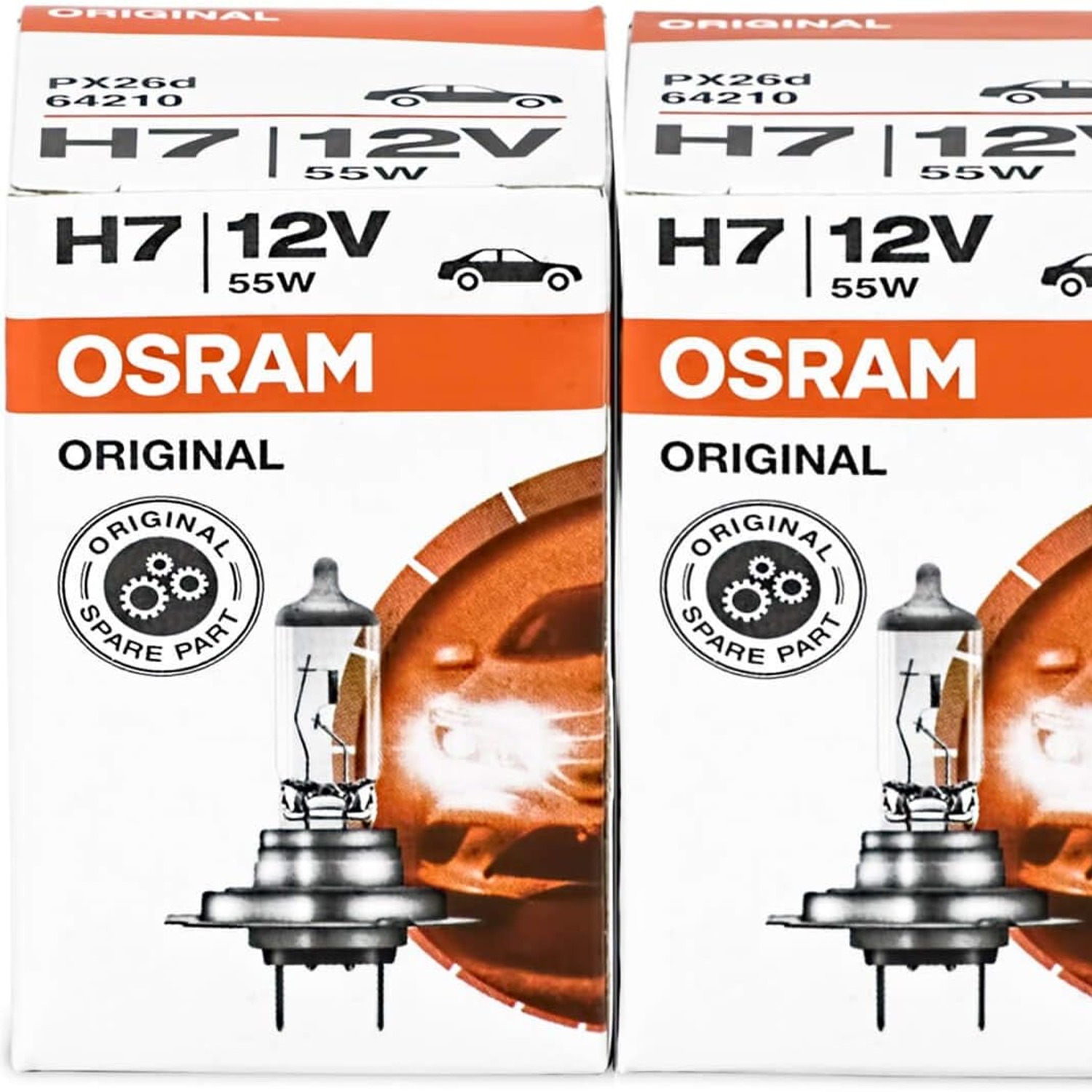
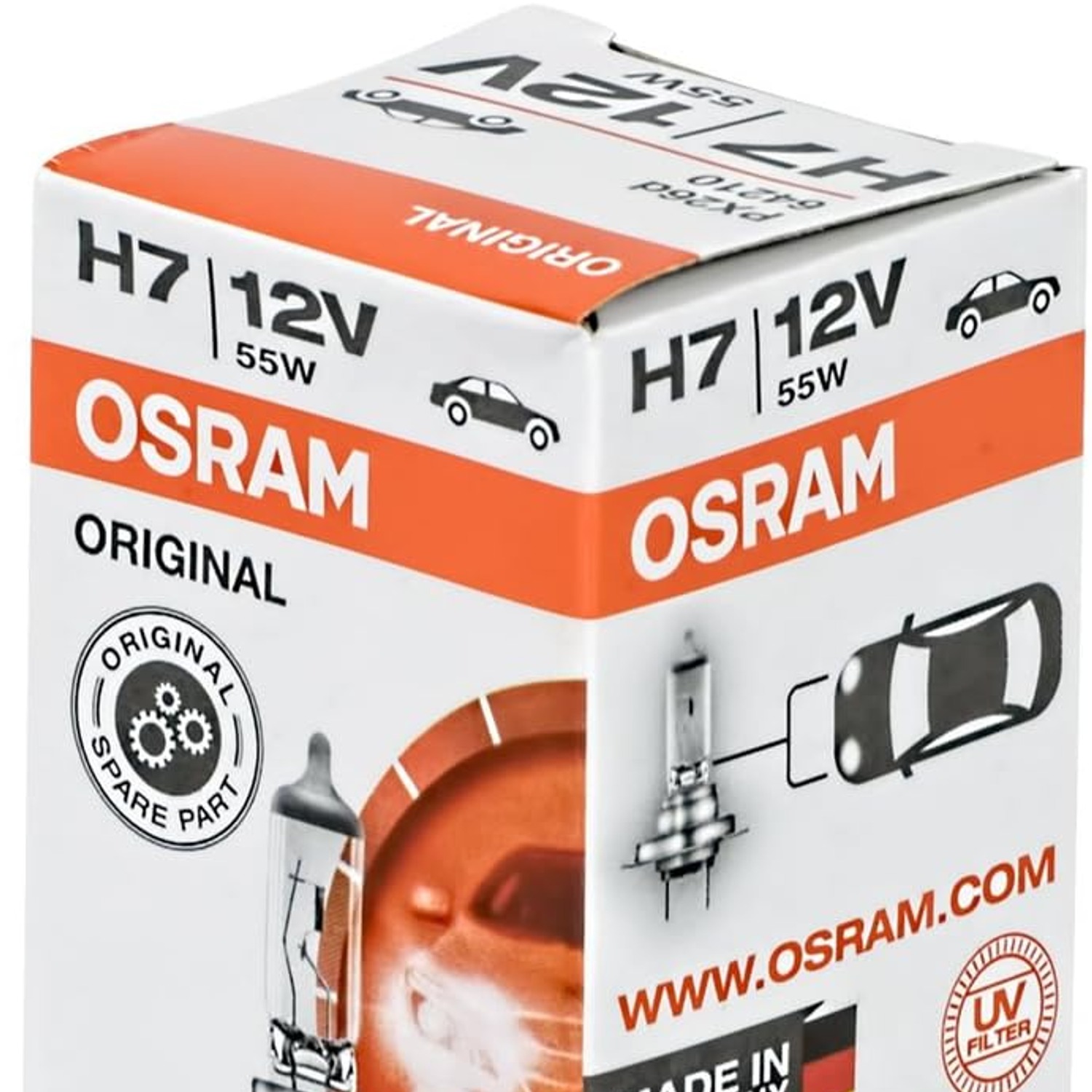
This is the job a pack of H7 halogen headlight bulbs is for. Two bulbs, same fitting, same rating, so you can put both sides right in one go and stop thinking about it.
What H7 actually tells you
H7 is a fitting code. It describes the shape of the bulb's base, the way it locks into the housing, and the electrical arrangement at the connector. It says nothing about brightness, nothing about color, and nothing about who made the bulb.
An H7 bulb has a flat tab base and two blade terminals, and it is a single-filament design, so each bulb does one job. On a lot of cars that means H7 handles the low beam while a different bulb handles the high beam, though some vehicles use H7 in both lamps, and some use it in the fog lights. The lamp's job is not the point. The socket is.
The bulbs in this pack are rated 12 volts and 55 watts. Twelve volts is the standard electrical system on a passenger car. Fifty-five watts is the standard power draw for an H7 halogen bulb. Staying with the standard rating means you are putting the same load through the wiring and the connector as the bulb you took out, which is exactly what you want from a replacement part.
Check the fitting before you buy anything
This is the step people skip, and it is the step that causes almost every return.
There are two reliable ways to confirm your fitting. The first is to open the hood, get the old bulb out, and read what is printed on its base. The marking is small but it is there, and it will say H7 if that is what you have. The second is to look it up in your owner manual, which lists bulb types for every lamp on the car.
What does not work is guessing based on a similar car, or assuming all modern headlights use the same bulb. They do not. Different fitting codes have different bases on purpose, so a bulb that is not an H7 will not sit correctly in an H7 socket. If it feels like it needs force, it is wrong. Stop and check.
We list fitment by fitting type only.
Why a pair beats a single
The second bulb in the pack is not padding. There is a genuine reason to buy two.
Both headlight bulbs on your car have run roughly the same number of hours. They were fitted at the same time, they have been switched on and off together, and they have been shaken by the same potholes. So when one gives up, the other is rarely far behind. Replacing just the dead one often means doing the whole job again a month or two later, in weather that is no better.
There is also the matching problem. A new halogen bulb next to a tired one looks uneven from the driver's seat. One pool of light is crisp and the other is slightly yellow and short. Once you notice it, you cannot stop noticing it.
If you genuinely only need one side today, fit one and put the other in the glovebox. A spare bulb in the car is one of those small bits of preparation that costs nothing and occasionally saves an evening. People hunting for the best glovebox spare bulb kit are really just describing this: one bulb, one cloth, one pair of gloves, tucked somewhere you can find it in the dark.
Fitting them without making life hard
On a well-laid-out car, changing an H7 bulb takes a few minutes a side and needs no tools. You reach behind the headlight, unclip the dust cover, unplug the connector, release the wire clip or twist the retaining collar, and the bulb comes out.
On a tightly packed engine bay it can be fiddlier. You might need to move an air intake duct, pull a plastic cover, or on some cars reach through the wheel arch after peeling back the liner. A basic screwdriver or socket set covers most of that. A flashlight you can hold in your teeth or clip somewhere helps more than any tool.
Two rules matter while you are in there.
First, do not touch the glass. Oil from your fingers left on a halogen bulb creates a hot spot when the filament lights up, and that shortens the bulb's life for no good reason. Hold the bulb by its base. If you slip, wipe the glass with rubbing alcohol on a lint-free cloth and let it dry fully before fitting.
Second, let things cool. Headlight bulbs get very hot in use, and the housing around them stays warm for a while after you switch off. Give it a few minutes, or wear a glove.
When the new bulb goes in, make sure the tab seats in its slot and the clip or collar locks home. A bulb that is not properly seated can sit at a slight angle and throw the beam somewhere unhelpful. Then switch the lights on and check both sides before you close everything up, because it is much easier to fix a loose connector now than at the roadside.
Aim is half the job
A bright bulb pointed at the hedge does not help you. If you have only swapped bulbs and left the headlight unit alone, the aim should be unchanged and there is nothing more to do. But if you removed the headlight, knocked it, or you have been carrying heavy loads in the back, it is worth checking.
The simple home check is to park square on to a wall or garage door on level ground, mark where the beams land, and look for two patches at the same height, spread evenly. If one is noticeably higher or pointing across the road, get the aim set properly. Many shops will do it quickly.
Looking after them
There is not much to it, which is part of the appeal of halogen.
Keep your hands off the glass. Store the spare in its packaging somewhere dry and padded rather than loose where it can be knocked. A cheap lens cleaning kit often does more for night visibility than people expect.
When a bulb does eventually fail, do not just bin it with the kitchen waste. Plenty of recycling centers and parts stores take old bulbs. Wrap anything broken in card first.
What we will not claim
We will not tell you these are brighter than something else by a percentage, because we do not publish brightness comparisons for this bulb. We will not quote a service life in hours, because real-world life depends on your driving, your roads and your car's electrical system. We do not claim an approval mark for this bulb, and if you need one, read the marking on the bulb you are removing and ask us before you order.
What we will tell you is exactly what the pack is: two new halogen bulbs, H7 fitting, 12 volts, 55 watts each.
The short version
If the bulb coming out of your car says H7, this pack replaces it like for like. Buy the pair, change both sides while you are in there, hold the bulbs by the base, and let everything cool before you start. Check your beams against a wall afterwards. Keep the spare if you only needed one.
It is a small job with a big payoff. A clean pair of headlights makes a dark road feel like a different road.