
The complete guide
H3 Halogen Headlight Bulbs - A Practical Buyer's Guide
The problem nobody notices until it is dark
Headlight bulbs almost never fail the way people imagine. There is rarely a dramatic pop. What actually happens is slower and sneakier: the filament ages, the light output drops off little by little, and your eyes quietly adjust to the dimmer beam. Then one wet night on an unlit road you realize you are driving a lot more carefully than you used to, and you are not sure why.
By the time one bulb finally goes out, the other side has usually been fading for just as long. Replace only the dead one and you end up with a bright side and a tired side, which can throw the beam pattern off balance and make the dark side look even worse by comparison. That is the simple reason these H3 halogen headlight bulbs are sold two to a pack. Change both, and you are back to an even spread.
What H3 actually means
H3 is a fitting code. It tells you the shape of the base and how the bulb locks into the housing.
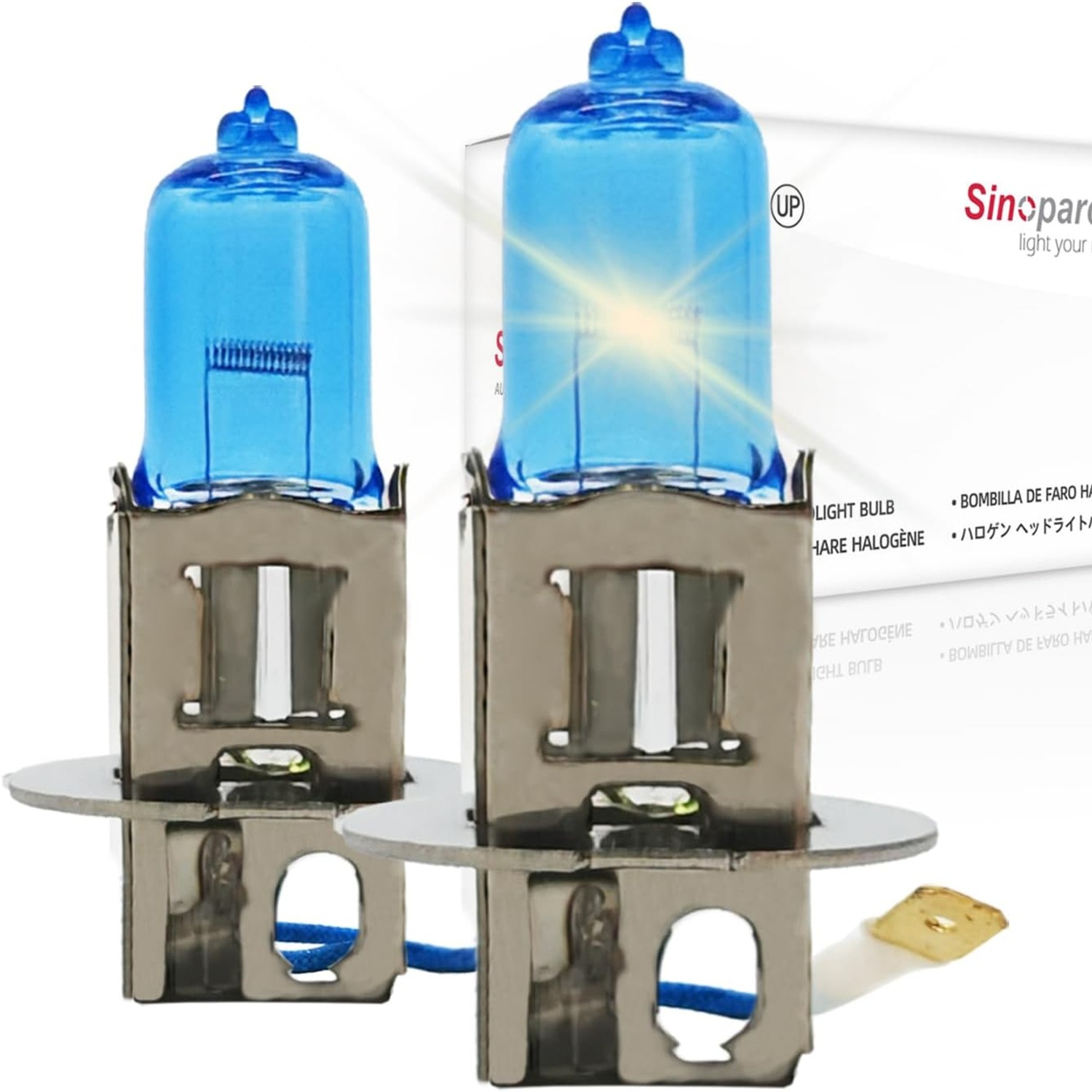
The H3 is a single-filament bulb with a short wire lead coming off the base, rather than a plug built directly into the bulb. You will find the fitting used in some headlight housings, and very widely in fog lights and aftermarket driving lights. That is worth knowing, because plenty of people come looking for the best h3 headlight bulb when what they are really replacing sits in a fog light.
Only an H3 will go into an H3 socket. Trying to force a different fitting is a waste of an evening. So before ordering anything, confirm the fitting. Two ways to do that:
- Look it up in the owner manual, usually in the maintenance or bulb replacement section.
- Pull the old bulb and read the code stamped on its metal base.
The second method is the one we trust most, because manuals sometimes list several variants and the bulb in your hand cannot be wrong.
The numbers on this pack
Fitting: H3. As covered above, this is the deciding factor.
Wattage: 55 watts. That is the standard draw for an H3 halogen bulb. Matching the wattage of what you remove is good practice, since the housing, wiring and connector were all built around it.
Color temperature: 3800K. Kelvin describes the tone of the light, not how much of it there is. At 3800K you get a warm white. It is not the blue-tinted look some drivers chase, and that is generally a good thing on real roads. Warm light holds up reasonably well on wet tarmac and against reflective signs, whereas cooler tones can look sharp on a dry test bench and less useful in drizzle.
We list what is stated for the product and nothing beyond it.
Who these suit
A pair of H3 bulbs makes sense in a few situations.
You have one bulb out and you want to do the job properly, replacing both sides so the beams stay matched. You have a set of fog lights or spotlights running H3 and the output has gone yellow and tired. Or you simply want spares in the glove box, which is one of the cheapest bits of peace of mind you can buy. A spare bulb kit costs very little and saves a lot of hassle when a light fails two hours from home.
These are not an LED conversion and they are not marketed as one. They are conventional halogen bulbs, which means they do what a factory bulb does and fit the way a factory bulb fits. For a lot of drivers, that straightforward swap is exactly what is wanted.
Fitting them without drama
On many vehicles the job takes ten minutes and needs no tools. You reach behind the housing, unclip the connector, twist or unclip the bulb retainer, and lift the old bulb out. The new one goes in the same way in reverse.
A few rules make the difference between a bulb that lasts and one that does not.
Keep your fingers off the glass. Hold the bulb by the metal base or the plastic collar. Oil from skin left on the envelope creates a hot spot once the bulb heats up. If you do touch the glass by accident, wipe it with a clean cloth and a little rubbing alcohol before fitting.
Let the old bulb cool first. Halogen bulbs get very hot in use. A bulb switched off a minute ago can still burn you, and it can mark plastic trim if you rest it down carelessly.
Seat it properly. Most failures that show up immediately after a swap come down to a bulb that is not fully locked in or a connector that is not pushed home.
Work on one side at a time. That way the side you have not touched yet is your reference if you forget how something clipped together.
If access on your car is awkward, with an air box or a battery sitting in the way, there is no harm in letting a workshop handle it. It is a quick job for them.
Looking after them
Halogen bulbs do not need maintenance once they are in. The useful upkeep happens around them.
Keep the lens clean. A hazy, scratched or road-filmed lens eats more light than most people believe, and no bulb can fix that. A wash and, where the plastic has yellowed, a proper lens restoration, can make a bigger difference than the bulb itself.
Check the housing seal. Moisture inside a headlight is a bulb killer, and it is also a sign that water is reaching places it should not. If you keep losing bulbs on the same side, inspect the seal and the back cover before you blame the bulbs.
Store spares in the box. Loose bulbs rattling in a door pocket get chipped and dirty, and dirty contacts cause their own problems later.
A word on markings and approvals
We do not claim an approval mark for this bulb. We are not telling you it carries any particular stamp, because the information we have lists the fitting, light source, pack quantity, wattage and color temperature, and nothing else.
If your situation requires a bulb with a specific marking, the practical move is to look at the base of the bulb you are taking out and see what is printed there. Then message us with that marking before you order and we will tell you what we can about whether this item matches. It is a thirty second check that saves a return.
How to choose between options
When people compare bulbs, they usually weigh three things.
The fitting, which is non-negotiable. Get this wrong and nothing else matters.
The wattage, which should match what came out unless you know the housing and wiring are built for something different.
The color tone, which is more personal than people admit. Some drivers prefer a warm beam because it feels easier on the eyes over a long night drive. Others like a cooler white. At 3800K this pack sits on the warm side of white, which many people find comfortable in rain and fog.
Beyond that, the honest advice is not to over-think a halogen bulb. It is a consumable. Buy the right fitting, fit it cleanly, keep a spare, and move on.
The short version
This pack contains two H3 halogen headlight bulbs, each rated 55 watts with a 3800K warm white color. They replace an H3 bulb and nothing else, so confirm the fitting in your owner manual or by reading the base of the old bulb before you order.
Change both sides together so the beams match. Handle the bulbs by the base, never the glass. Let old bulbs cool before touching them, because they run very hot. Keep the spare in its box in the glove compartment.
If you are not certain what fitting your car uses, send us the code from your old bulb and we will check it with you.