
The complete guide
H1 LED Headlight Bulbs - A Practical Buyer's Guide
The problem with old yellow bulbs
If you have ever stood back and looked at your car at night, you have probably noticed how warm and yellow the light from a traditional halogen bulb looks. Next to a modern build running cool-white lighting everywhere else, that yellow can feel dated. It is the single most noticeable thing about a car's front end after dark.
That is the reason most people start looking at H1 LED headlight bulbs. The goal is usually a look rather than a technical upgrade: a crisp, cool-white point of light that matches the rest of the build. A 6500K color temperature is the common choice for exactly that reason, and it is the color this set runs.
Before going further, one thing needs saying plainly, because it shapes everything else on this page. These are LED conversion bulbs. In the United States, fitting LED bulbs into headlight housings that were built around halogen bulbs is generally not permitted on public roads. This set is sold for off-road, show and private property use. That means closed courses, track days, display vehicles, farm and site work on land you have permission to be on, and the workshop. It does not mean the highway.
What an H1 fitting actually is
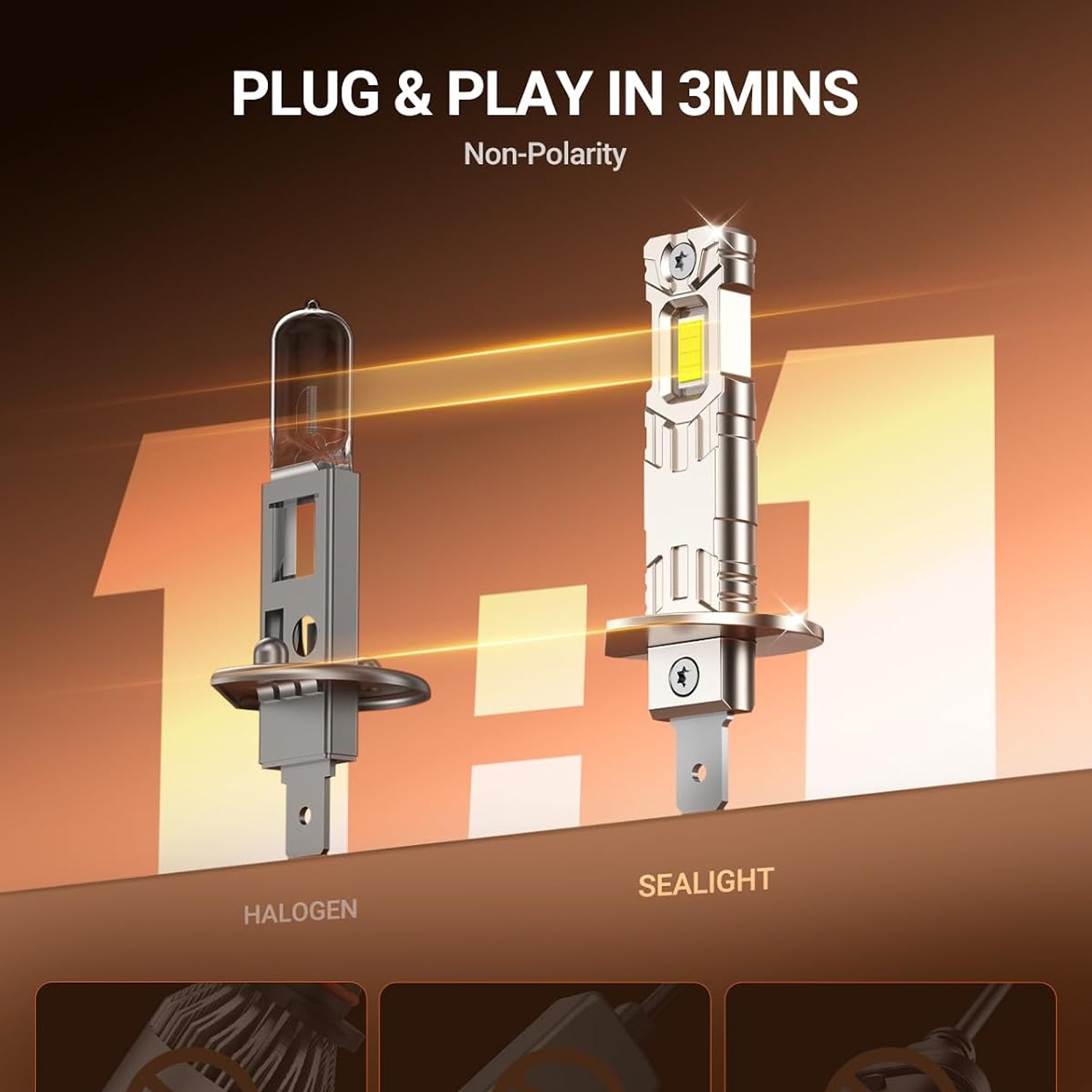
H1 is a bulb fitting, not a vehicle category. It describes the physical shape of the bulb base and the connector it uses, and it is one of the single-filament fittings that turns up all over the automotive world. You will find H1 in main beam units, in dipped beam units on some vehicles, and in fog and auxiliary lamps on plenty of others.
Because it is defined by shape rather than by car, the only reliable way to know whether this set matches your lamp is to look. Pop the back cover off the housing, release the clip or retaining ring, and pull the existing bulb out. The fitting code is almost always printed on the base. If it says H1, you have your answer.
What a fitting code does not tell you is whether a given bulb will physically fit the space. LED bulbs have a different shape to the halogen bulbs they replace, and some housings are far tighter than others. That is the second measurement worth taking: how much depth you have behind the lamp once the dust cover is back on.
What 6500K means in plain terms
Color temperature is measured in Kelvin, and the number works backwards from what most people expect. Low numbers look warm and yellow. High numbers look cool and white, with a faint blue lean at the top end.
A traditional halogen bulb sits low on that scale, which is where the familiar yellow comes from. At 6500K, this set sits in the cool-white range. Side by side with halogen, the difference is immediate and obvious.
The practical reason to care is consistency. If you already run auxiliary pods, a light bar or interior lighting in a similar cool-white range, matching the headlight bulbs to that point makes the whole vehicle look deliberate. Mismatched color temperatures across one car are the sort of detail that nags at you once you have seen it.
Who this set suits
The people who get the most out of a pair like this tend to fall into a few groups.
Project and show car owners who want the front end to match a modern build, and who only run the car on display stands, at events or on closed roads. Off-road and four-wheel-drive owners who run auxiliary lighting on private tracks and want the H1 lamps on the vehicle to sit in the same color family. Workshop and site vehicles that spend their working life on private property. Track day regulars who want a consistent look and never take the car beyond the paddock and the circuit.
Who it does not suit is just as clear. If the vehicle is a daily driver on public roads and the headlight housings were built for halogen bulbs, this is not the product for that job. No amount of wanting it to be otherwise changes that.
Choosing well, and the three checks to make first
There are really only a few things to settle before you order.
The first is fitting type. Confirm the base reads H1. Guessing from a parts diagram or a forum post is how people end up with bulbs that will not seat.
The second is clearance. Measure the depth available behind the lamp with the dust cover in place. Tight engine bays and shallow fog housings are where conversion bulbs most often come unstuck, and no fitting code warns you about it.
The third is electronics. Some vehicles run checks on their lighting circuits and respond to an LED bulb with a dashboard bulb warning or visible flicker. This varies a lot between vehicles, and there is no way to predict it from the bulb alone. Where it happens, a CANbus decoder is the usual answer. A decoder is not included with this set, so if you know your vehicle is sensitive to lighting changes, budget for one separately.
A fourth, softer check is color matching. If you have other lighting on the vehicle, look at its color temperature and decide whether 6500K will sit comfortably alongside it.
Fitting, in broad strokes
How hard the swap is depends almost entirely on access. On some vehicles the back of the lamp is right there and the whole job is a dust cover, a spring clip and a connector. On others you are removing an air box or a wheel arch liner before you can get a hand in.
Whatever the vehicle, a few habits are worth keeping. Disconnect power before you start. Handle the bulb by the base and keep fingers off the lens and the emitting surface. Let an old bulb cool before you touch it. Refit the dust cover properly so the housing stays sealed against water and grit, because a badly seated cover will cause more trouble over a winter than the bulb ever will.
Change both sides at once. That is the whole point of a pack of two, and it saves the odd look of one white lamp and one yellow one.
Once everything is back together, check your lamp aiming as part of normal setup on whatever private ground you are working on. It is good practice after any bulb change.
Looking after them
LED bulbs do not ask for much. Keep the lens area clean with a dry, soft cloth and skip solvents. Keep the housing sealed. Store spares in their box somewhere dry rather than loose in a toolbox where something will eventually scuff the lens.
If one side ever behaves differently to the other, check the connector and the seating before assuming the bulb is at fault. Loose connections and damp covers cause more odd behavior than most people credit.
The short version
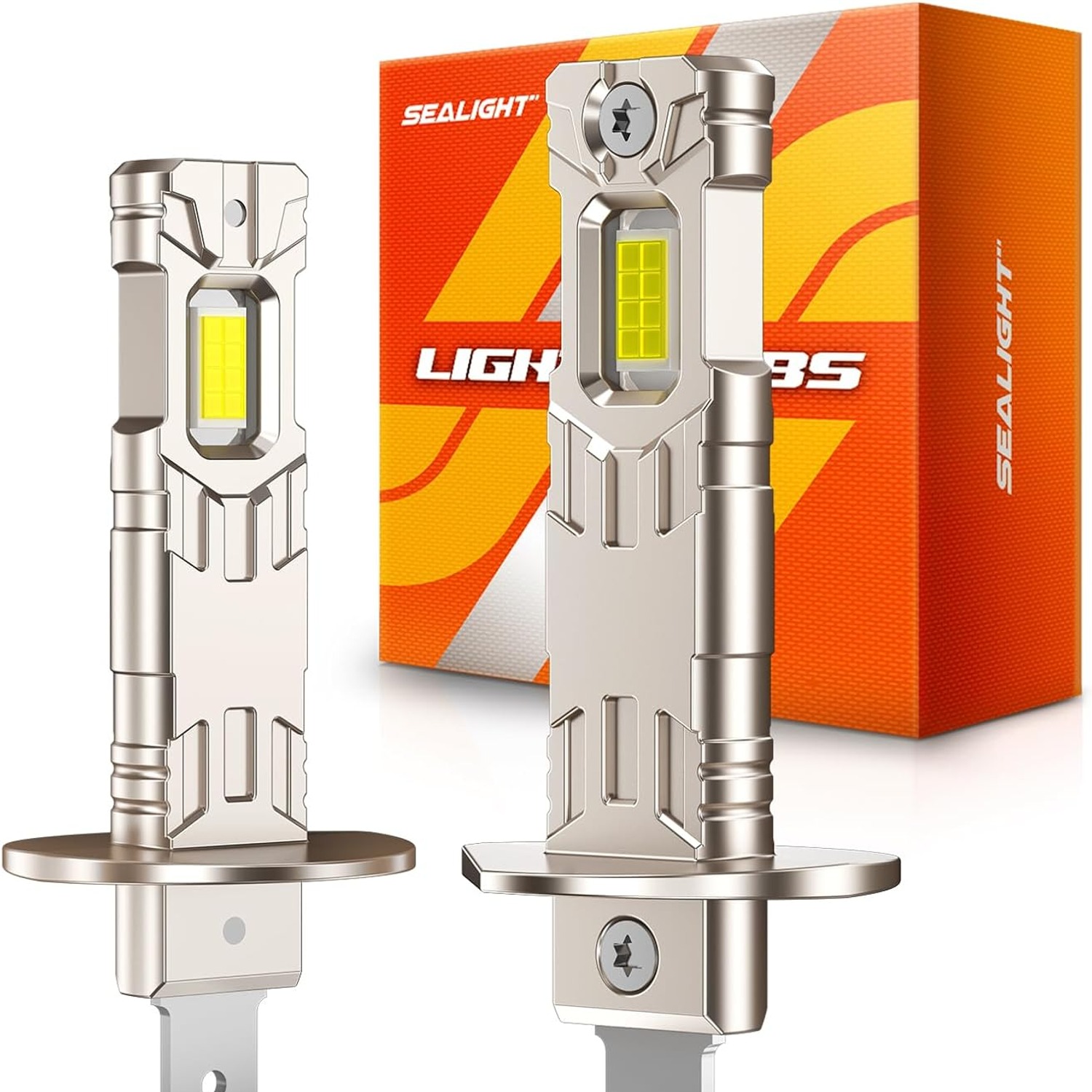
This is a pack of two H1 LED headlight bulbs running a 6500K cool-white color temperature. Fitment is by bulb fitting only, so check that your lamp takes an H1 bulb and measure the space behind the housing before you order.
Because these are LED conversion bulbs, they are sold for off-road, show and private property use, and not for use on public roads in headlights designed for halogen bulbs. Some vehicles will show a bulb warning or flicker with LED bulbs and may need a CANbus decoder, which is not included.
Get those points straight and the rest is simple: a matched pair, a cool-white look, and a front end that finally matches the rest of the build.