
The complete guide
H7 LED Headlight Bulbs, A Straight-Talking Buyer's Guide
The problem these bulbs are solving
You pop the hood, pull the dust cap, and the light coming out of the front of the car looks tired. Yellow, a bit dim at the edges, and nothing like the crisp white on the car parked next to you at the show. That is usually the moment people start looking at an H7 LED conversion kit.
Halogen bulbs do a job, but they have a look. Warm, slightly amber, and it never quite matches modern white accent lighting, LED light bars, or white marker lights. If the rest of your build runs cool white and the headlights run warm yellow, the front of the car reads as two different cars.
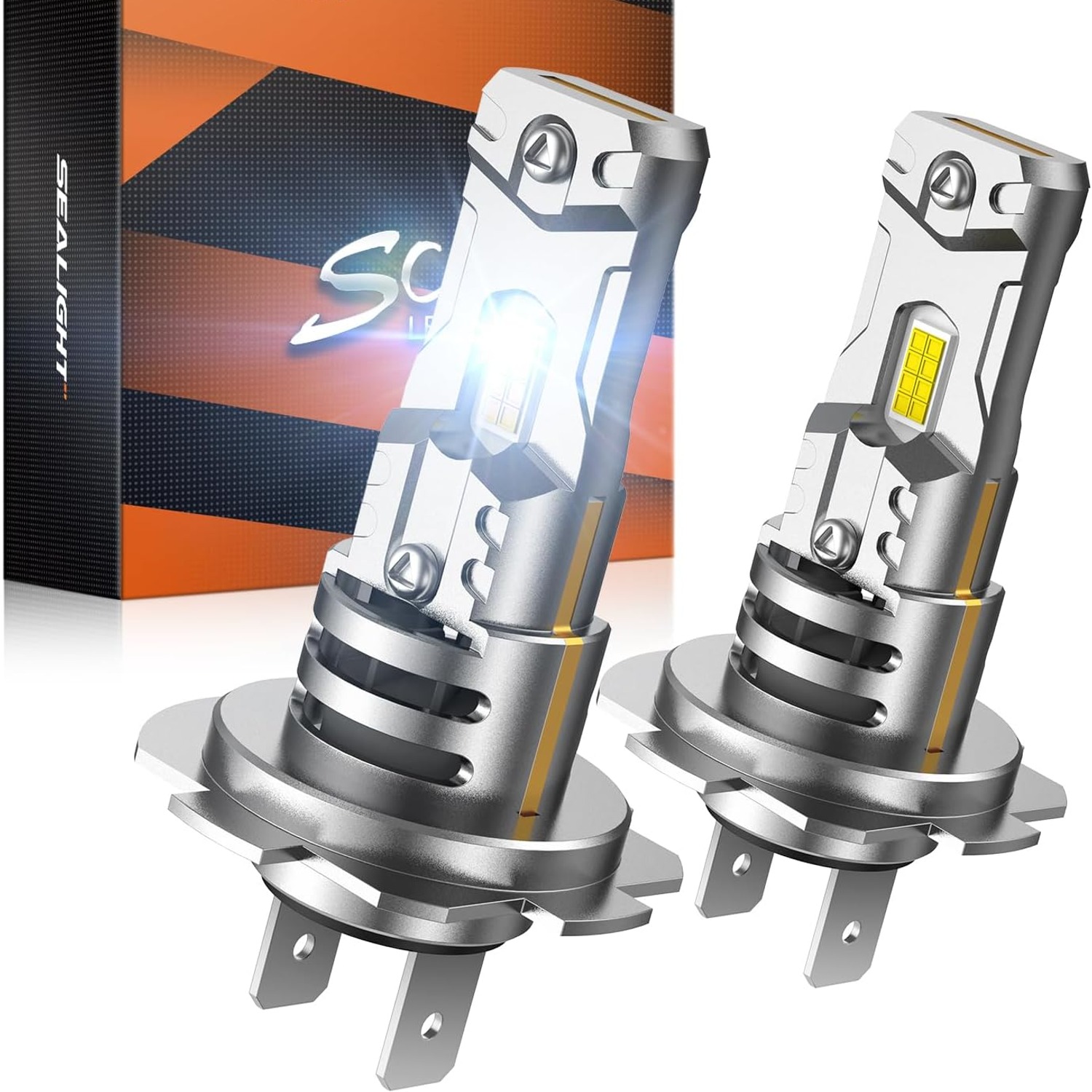
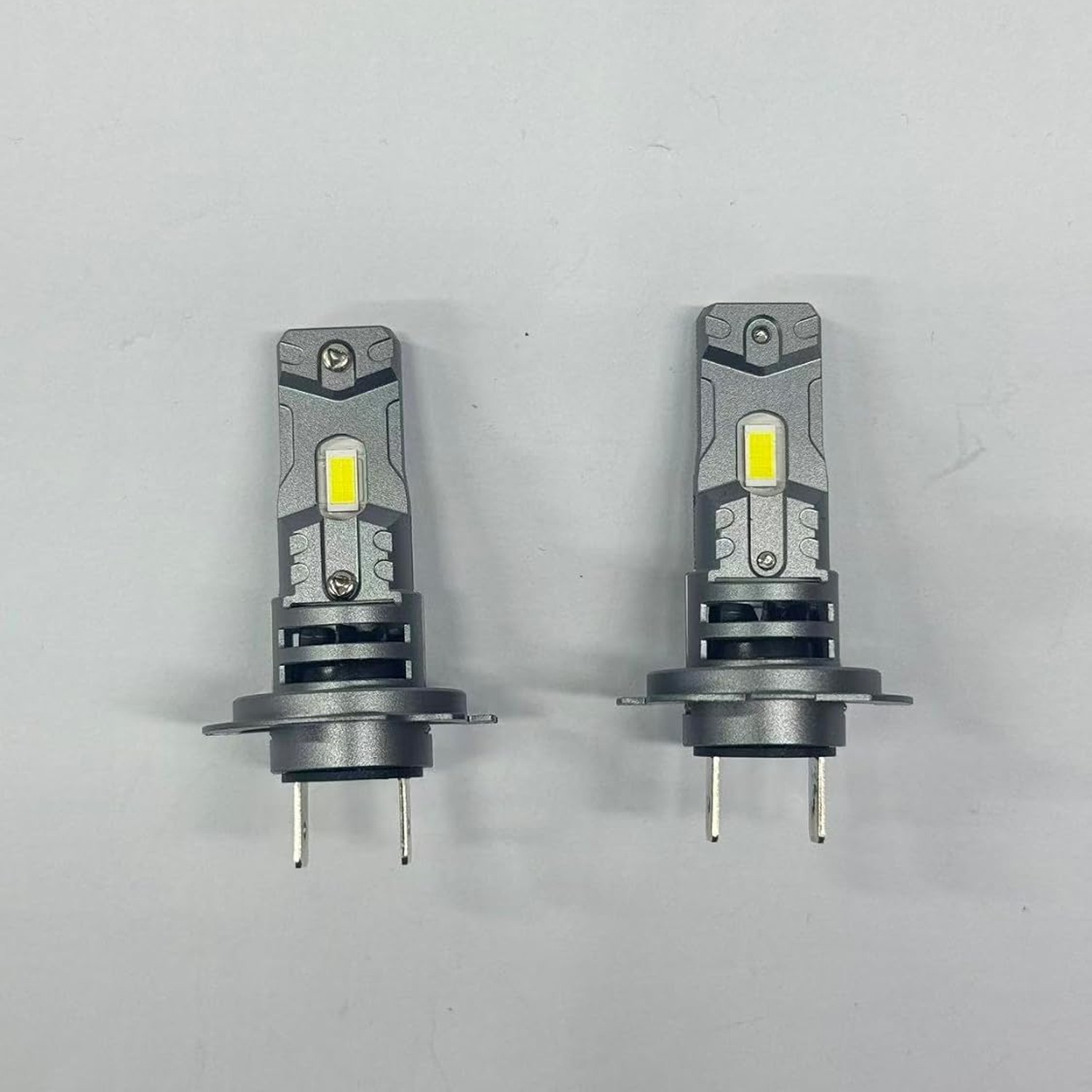
This set is a pair of H7 LED headlight bulbs at 6500K, which is firmly in the cool white range. Two bulbs in the pack, so both sides change at once and the front of the car reads as one color instead of two.
Before we go further, the important bit. In the United States, fitting LED bulbs into headlights that were built for halogen bulbs is generally not permitted on public roads. This set is sold for off-road, show and private property use. If your car is a daily driver on public roads, this is not the product for that car. If it is a track car, a trail rig, a display build or something that lives on private land, read on.
How an LED conversion bulb works
A halogen bulb is a filament in a gas-filled glass envelope. Current heats the filament, the filament glows, and the heat goes out through the glass. An LED bulb works differently. The light comes from semiconductor chips mounted on a base, and the heat has to be pulled away through the body of the bulb rather than radiated out the front.
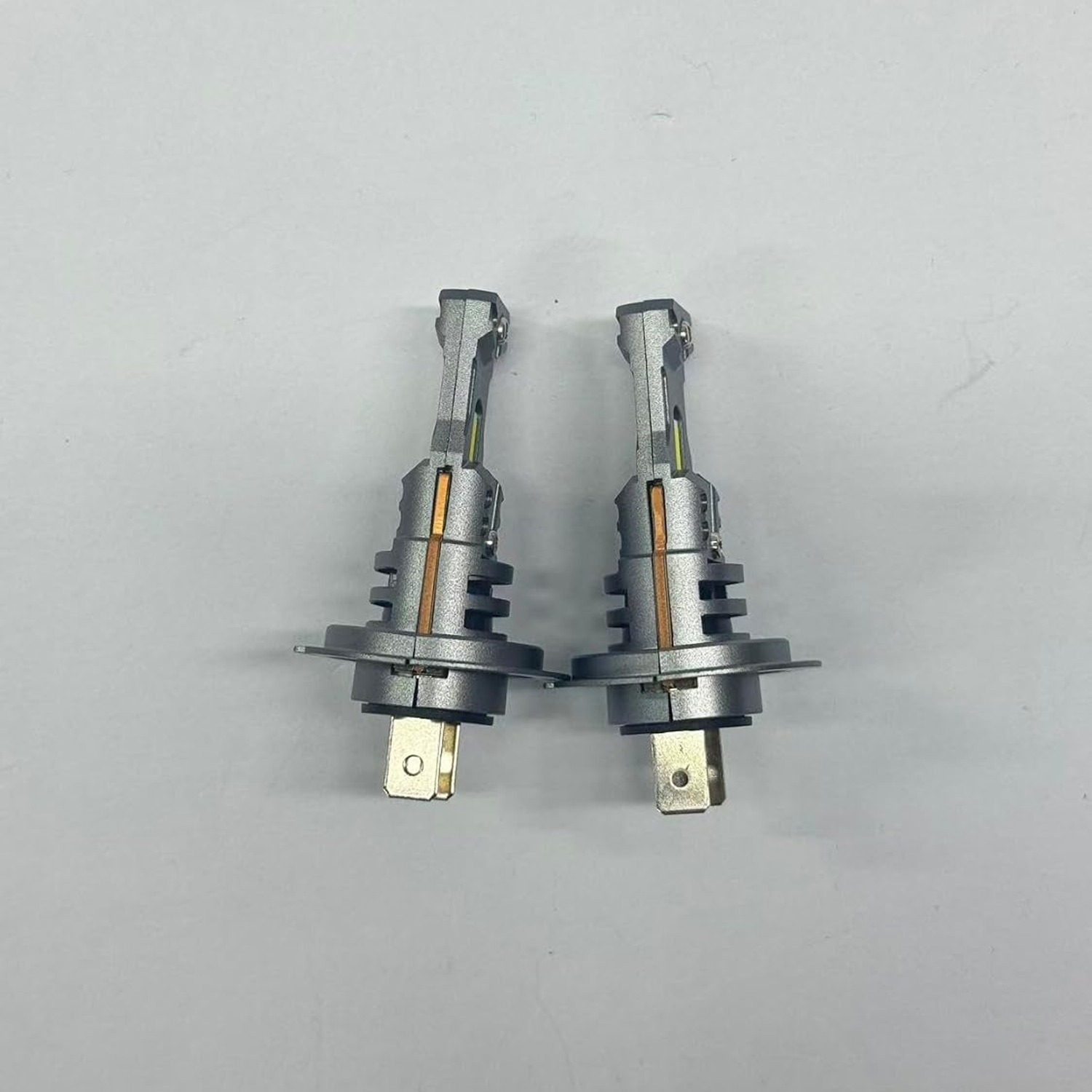
That is why an LED bulb looks different behind the base. There is a cooling section back there, which can be a finned block or a flexible braid, and it needs air around it to do its job. A halogen bulb has nothing in that space, so some housings were never designed with room for it. This is the number one fitment question with any led headlight upgrade, and it has nothing to do with the H7 fitting itself.
The electrical side is the other difference. A halogen filament draws a steady, predictable current. An LED bulb draws much less, and some vehicles monitor that draw to check whether a bulb has failed. When they see a low draw they may report a bulb out on the dash, or they may pulse the circuit in a way that shows up as flicker. That is what a CANbus decoder addresses. It sits in line and settles the signal the car is reading. A decoder is not included with this pack, so if your vehicle turns out to need one, budget for it separately.
What 6500K actually means
Color temperature is measured in Kelvin, and the scale runs counter to how most people think about warm and cool. Low numbers are warm and yellow. High numbers are cool and blue-white. A standard halogen bulb sits down around 3200K and reads as yellow-white. At 6500K you are in cool white territory, the kind of white that looks clean against paint and matches most white accessory lighting.
Worth saying plainly, color temperature tells you nothing about how much light a bulb puts out. It is a description of the tint. Two bulbs can share a Kelvin number and behave completely differently. Pick a Kelvin figure because of how you want the car to look, not as a performance number.
For most builds, 6500K is the safe pick. It photographs well, it matches white LED strip and marker lights, and it does not drift into the purple-blue territory that some much higher numbers land in.
The IP68 rating, and what it does not cover
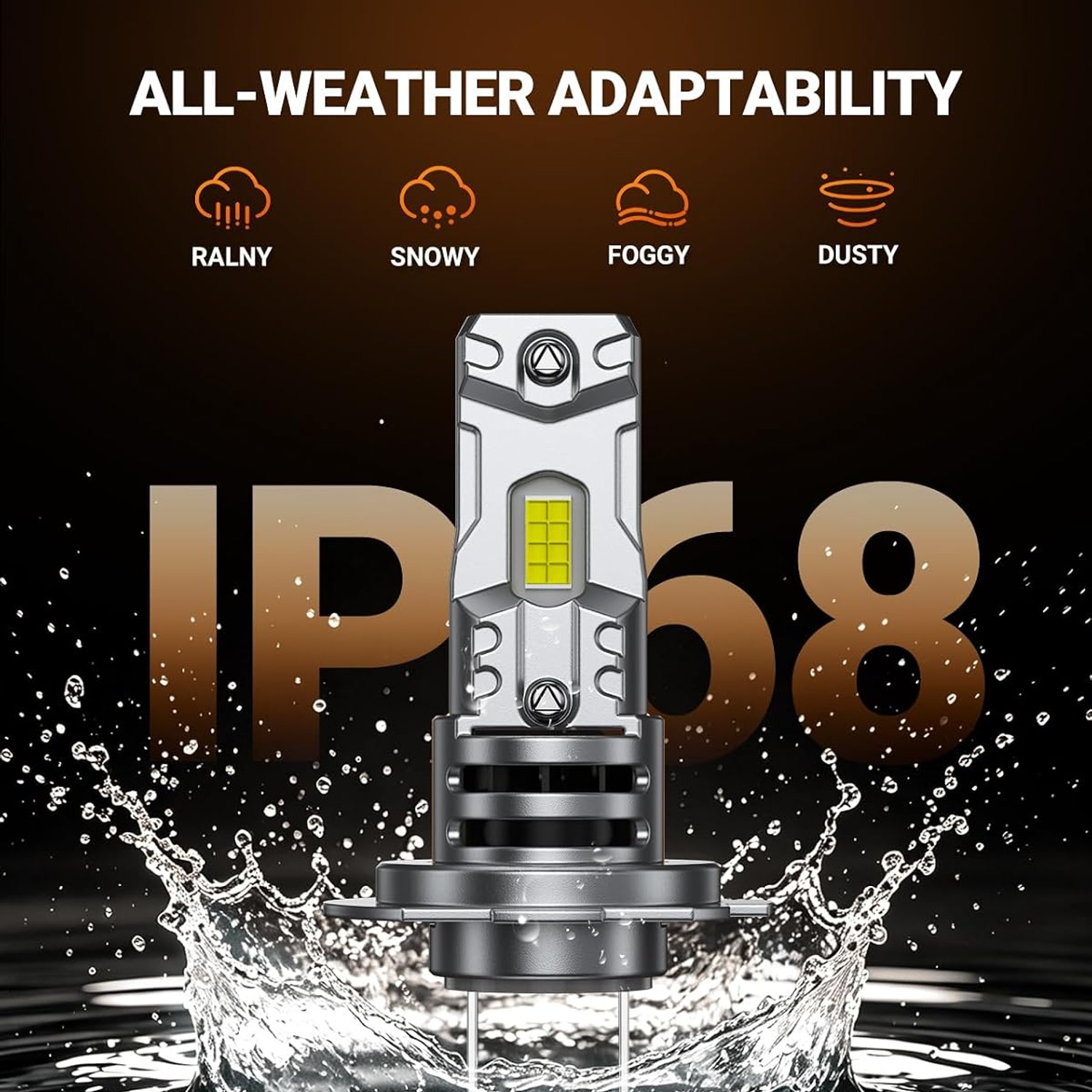
IP ratings have two digits. The first covers solids, mostly dust, and the second covers liquids. IP68 is the top of the solids scale and a high water rating, which is why you see it on gear that lives outdoors.
For a bulb that goes behind a headlight lens, this matters more than people assume. Headlight housings are not sealed vaults. They breathe, they vent, and they pick up moisture when a hot housing meets cold rain. Trail rigs get the full treatment of dust, water crossings and pressure washing. A sealed bulb body copes with that better than an open one.
What the rating does not do is fix your housing. If the lens is cracked, the dust cap is missing, or a seal has gone hard and split, water gets in regardless of how well the bulb is sealed. Fix the housing first, then fit the bulbs.
Who this set suits
Track day cars, where the car is trailered or driven on a closed course. Trail rigs and off-road builds. Show cars and static displays, where the look matters more than anything else. Workshop and project cars that are not registered for road use.
It also suits anyone doing a staged build who wants the lighting color to match across the whole front end. If you have already fitted white marker lights or an auxiliary bar, warm halogen headlights stick out.
Who it does not suit is simple. Anyone looking to put these into a halogen headlight on a car driven on public roads in the United States.
How to choose and check before you order
Start with the fitting. Pull the dust cap off the back of the housing and look at the bulb base. H7 has a distinctive single tab arrangement. If you are not certain, photograph the base and ask.
Then measure the clearance. Hold a tape measure at the back of the bulb opening and see how much depth you have before you hit anything, whether that is a strut tower, an air box or the inner fender liner. This is the step people skip, and it is the step that causes most returns. Some housings have deep dust caps or aftermarket extended caps that buy you the room you need.
Think about whether you will need a decoder. If your vehicle is known in owner forums for bulb-out warnings, assume you may need one. It is not included here.
Finally, buy the pair. A single bulb replacement always looks like a single bulb replacement.
Fitting and care
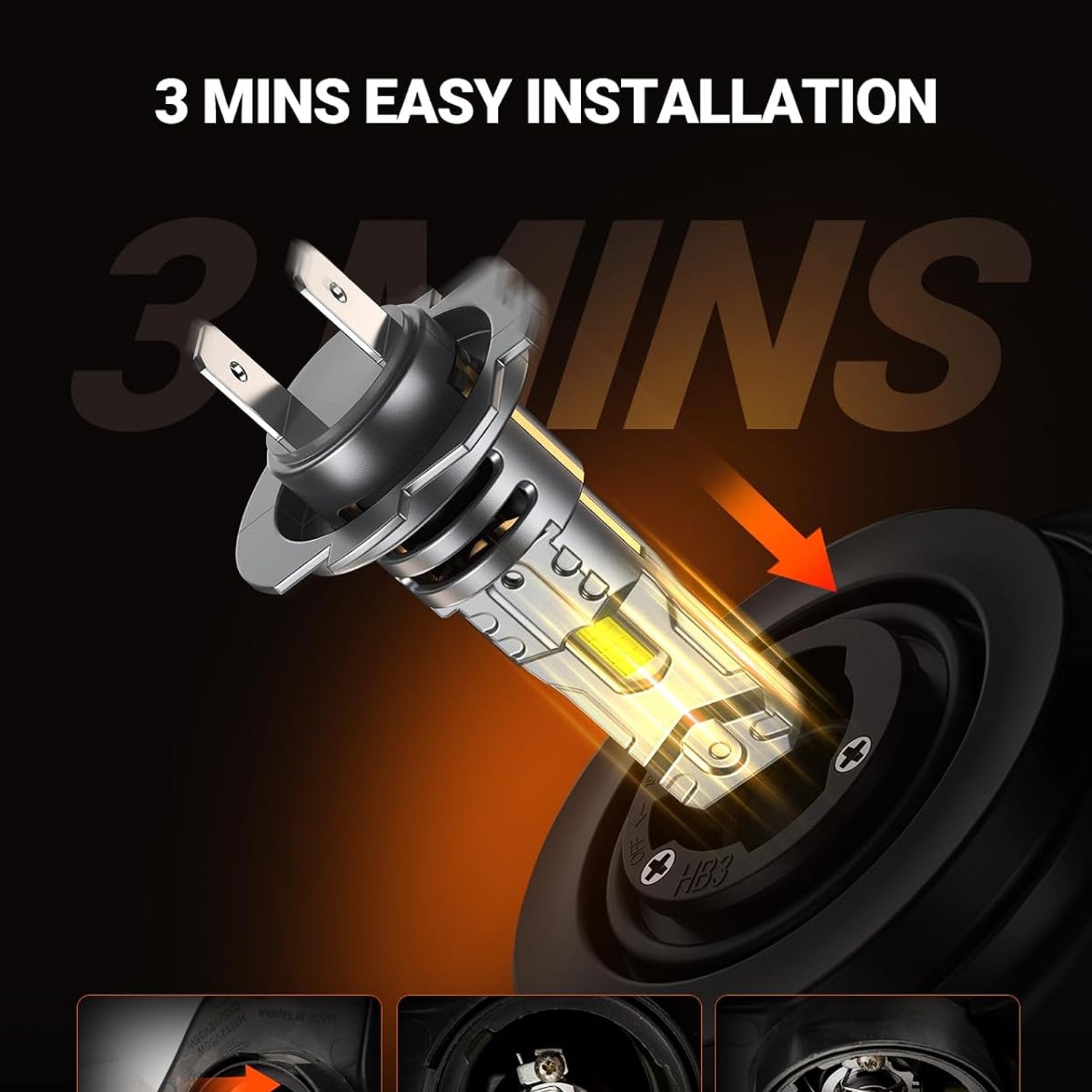
Fitting is usually straightforward. Disconnect power, remove the dust cap, release the retaining clip or twist the collar, pull the old bulb, seat the new one, and reconnect. On some vehicles you need to shift an air intake or a washer bottle to get your hand behind the housing. Take your time with the retaining clip. They are easy to bend.
Handle the bulb by the base or the cooling body. Avoid touching the chips. Once fitted, make sure the dust cap seats properly. An open housing lets in dirt and moisture no matter how good the bulb seal is.
Ongoing care is light. Keep the cooling section clear of debris so air can move around it. Wipe dust away with a dry microfiber cloth. Keep solvents off the body. If you ever get flicker after a period of normal running, check the connector before assuming the bulb has failed.
The short version
This is a pack of two H7 LED headlight bulbs at 6500K with an IP68 rating. They use the standard H7 fitting, they produce a cool white light, and the bulb body is sealed against dust and water.
They are sold for off-road, show and private property use. In the United States, fitting LED bulbs into headlights built for halogen bulbs is generally not permitted on public roads.
Check the fitting, measure the clearance behind the housing, and be aware that some vehicles show a bulb warning or flicker with LED bulbs and may need a CANbus decoder, which is not included. Do those three things first and the rest of the job is quick.